Most supernatural horror borrows from Christianity like it borrows from a haunted doll. The crucifix is erected. The priest is an instrument of conspiracy. Whatever the film actually believes about good and evil tends to evaporate once the demon starts throwing furniture.
Soul Snatchers is not constructed that way. Julio Román’s Puerto Rican production, written by Román and Cesar R. Castillo and produced entirely in English, is based on faith in the broadest sense of the term. Román described the film as being about redemption, family, and the spiritual world becoming physical, and he deliberately made it in English, in order to move Puerto Rican cinema to a broader international market. Horror relies on the premise that spiritual warfare is real rather than treating the idea as seasoning.
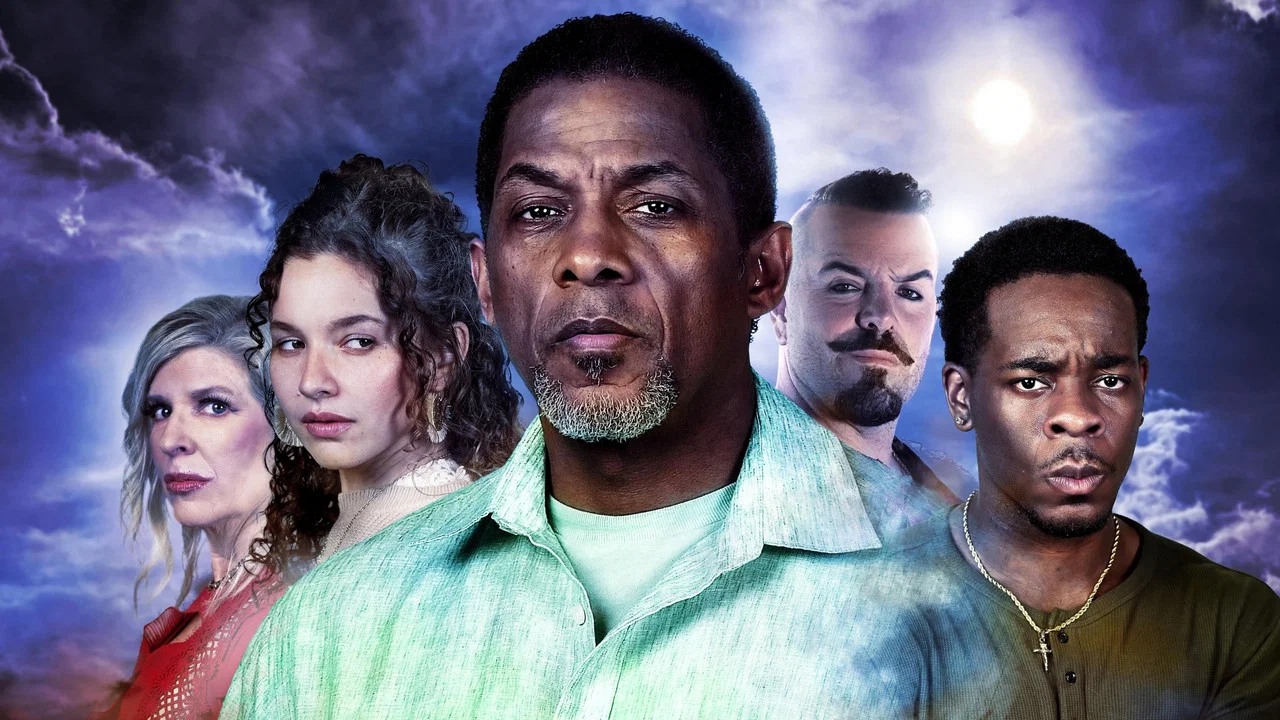
The setup is simple. Emmanuel, played by Cameron Arnett, takes his missionary family back to the Caribbean island where he grew up, planning to open a music school for orphaned children. The project does not survive contact with the island. His youngest son falls under the influence of a powerful cult leader positioned in direct opposition to Emmanuel and all he represents. His eldest son moves away from the family. What begins as a return home becomes a struggle for a home, and the film treats this struggle as literal rather than psychological.
Faith is not the subtext here

The religious framing rests on Arnett. He has spent years in Christian cinema, and his comments on Soul Snatchers make it clear that he approaches the film’s spiritual warfare with sincerity rather than as genre facade. He spoke directly about biblical spiritual warfare, about wanting the audience to understand that God’s power has already overcome evil, and about how Christians are the ones who should understand the supernatural rather than avoid it.
This has consequences for horror, and they go both ways. A protagonist who already knows what he’s looking at gives the film an unusual backbone. Emmanuel is not a skeptic waiting for proof, so the film never needs to spend a day convincing him that something is wrong. He can start the fight early and stay there.
The trade is doubtful. Horror is much more often based on uncertainty than on conviction. Not knowing if the thing in the hallway is real, if the parent can be trusted, if the rules are what the characters believe. A worldview in which the outcome is already settled eliminates many of these questions before the first scare arrives, and a film committed to that worldview must find its tension elsewhere. The most promising place is family. Emmanuel can be absolutely right about the war while losing his own home, and it is in the drift of the eldest son that this possibility lies.
Too much talk for 104 minutes

Soul Snatchers aims higher than the faith-based label usually implies. It made its market debut at the 2026 Cannes Film Market as part of an international rollout, and the ambition is visible on the packaging. This is a film that wants to sit alongside international supernatural thrillers rather than church basement productions.
One of the few early reactions from viewers specifically praises the production values and visuals while calling the storyline convoluted and difficult to follow once the film escalates. This is an answer rather than a consensus, and the number of published reviews of this film is currently minimal. It is worth noting, however, because the shape of the complaint matches the shape of the material.
Count what’s in the script in 104 minutes. Emmanuel’s return to the island. Missionary work. The music school. The supernatural situation of the youngest son. The estrangement of the eldest son. The opposing leader. The family under tension. Redemption. And an explicit theological argument that the film wants audiences to understand and accept. That’s a lot of buoyant material for a runtime that isn’t particularly long, and narrative overcrowding is the most likely failure mode for a script with this many obligations. Ambition beyond clarity is a more forgivable problem than saying nothing, but it’s still a problem.
So does it really work as a horror

The available evidence suggests a film that works better as a supernatural spiritual drama than as a fear delivery system. The published mainstream horror review, which scores a 5 out of 10, describes a gentler, more restrained picture than the marketing suggests and reports that it does not provide significant scares or thrills, while finding value in its theatrical villains and a certain charm. Letterboxd’s response aims first at production values and visual ambition. Neither is afraid.
Two data points can’t fix anything, and different viewers will draw the line between atmosphere and tension in different locations. But the trend is consistent enough to set expectations. Anyone who comes to Soul Snatchers for sustained terror is likely to find something calmer and more devotional. Anyone who comes looking for a supernatural story that means every word of its theology is closer to the target audience.
This sincerity is the real particularity of the film. Many possession films are technically proficient and don’t believe in anything at all, which is why they get confused. Soul Snatchers believes in what it shows, and this belief gives it an identity that survives difficult times. Everything in the available file points in the same direction. The film is most distinctive when total belief in spiritual warfare drives the story, and most tense when that same certainty leaves it with more theology and more intrigue than 104 minutes can comfortably accommodate.