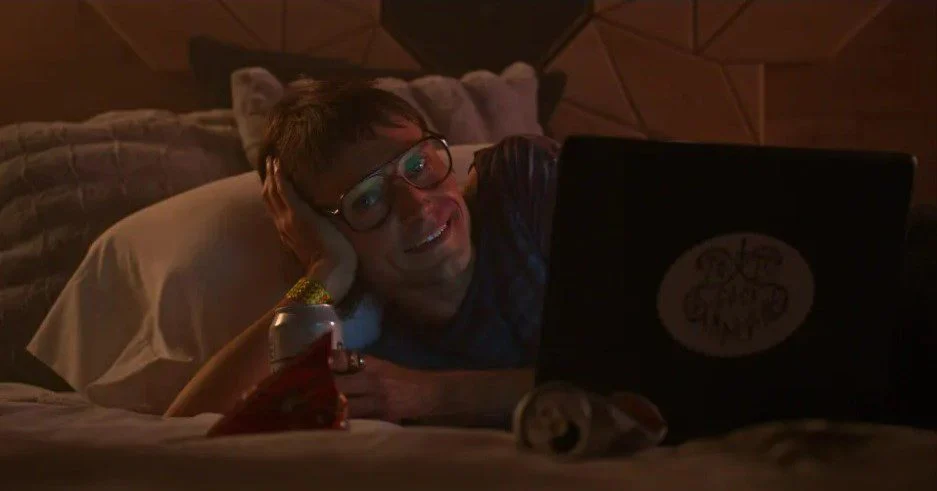
There are movie monsters and then there are the men you recognize on sight. Caleb is definitely the second type. Zachary Ray Sherman plays him with a smile so precise that each interaction feels a little heavier than the last. He’s not bothersome because he looks dangerous, but because he seems like someone you’ve already learned to avoid in the office.
This is the part of this film that stood out to me. Caleb is clumsy without being harmless and off-putting without becoming cartoonish. The discomfort comes from seeing a man misinterpret the same boundary over and over again while remaining certain that everyone else is the one with the problem. Sherman clearly understands that the worst version of this character is the one who thinks he’s behaving normally.
The camera gives him permission

Tim Kasher writes, directs and constructs the film around Caleb’s need to document everything within his reach. His interest in his co-worker Krista begins as something he can file in the form of a film before the camera turns into yet another means of ignoring consent. The found footage structure deserves its place here because Caleb already views recording people as a normal extension of his personality. The camera doesn’t make him a creep, but rather gives him a reason to keep going.
This shifts the film from being about whether anyone is being watched to who has decided that they have the right to watch it. Privacy becomes negotiable the moment Caleb deems his own curiosity important enough. The film eventually brings the lens back to the man holding it. Surveillance becomes much less comfortable once the observer has to sit with the idea that someone might be watching them.
It’s funny until it’s not

There’s a real vein of dark comedy through it all and almost all of it comes from Caleb. Some of his behavior is such a social catastrophe that laughing is almost involuntary. The humor works because the film knows how thin the wall is between the embarrassing and the threatening. The same behavior that seems pathetic in one scene reads as alarming the moment the other person loses control of the situation.
The film doesn’t stay in a single register for long either. It oscillates between uncomfortable comedy, surveillance thriller and psychological horror and how well that mix suits you will depend on your appetite for being moved between them. Sherman is the passing line that holds it all together. He keeps Caleb obnoxious enough that the changes feel like one man rather than three different movies.
Moon Verdict

Who’s Watching is at its best when it stays tight. This isn’t really a film about cameras or social media. This is the type of person who uses them as cover for something they already wanted to do. He’s funny until he’s not, and pathetic until we remember that pathetic people are still capable of harm.
What lasts is Caleb and his terrible familiarity. The film doesn’t need a mask, a conspiracy, or invented technology, because a lonely, empowered man with a camera and a theory about his own importance covers it. Tonal variations will appeal better to some viewers than others. The horror of surveillance doesn’t demand the future when the scariest person watching you is the one who doesn’t understand why you want them to stop.
3/5