Horror trains you to watch corners. Check the darkness, check behind the door, check what the frame isn’t showing you. Blood Shine removes this habit almost immediately, because everything terrible happens where you can see it.
Emily Bennett and Justin Brooks, who previously worked together on Alone with You, have made a folk horror film about a woman who loves the light. Bennett plays Clara, alone in rural upstate New York, leading a private religion sheltered from the sun, rituals, and increasing physical costs. David Call plays Brighton West, a horror director who comes North to finish a script and ends up as fodder for someone else’s faith.
This is the setup. What Bennett and Brooks do with it is more interesting than the logline suggests, at least until the film starts repeating itself.
Bennett is the reason it works

Clara could have been a stock fanatic. The script gives her every chance of being one, and Bennett refuses.
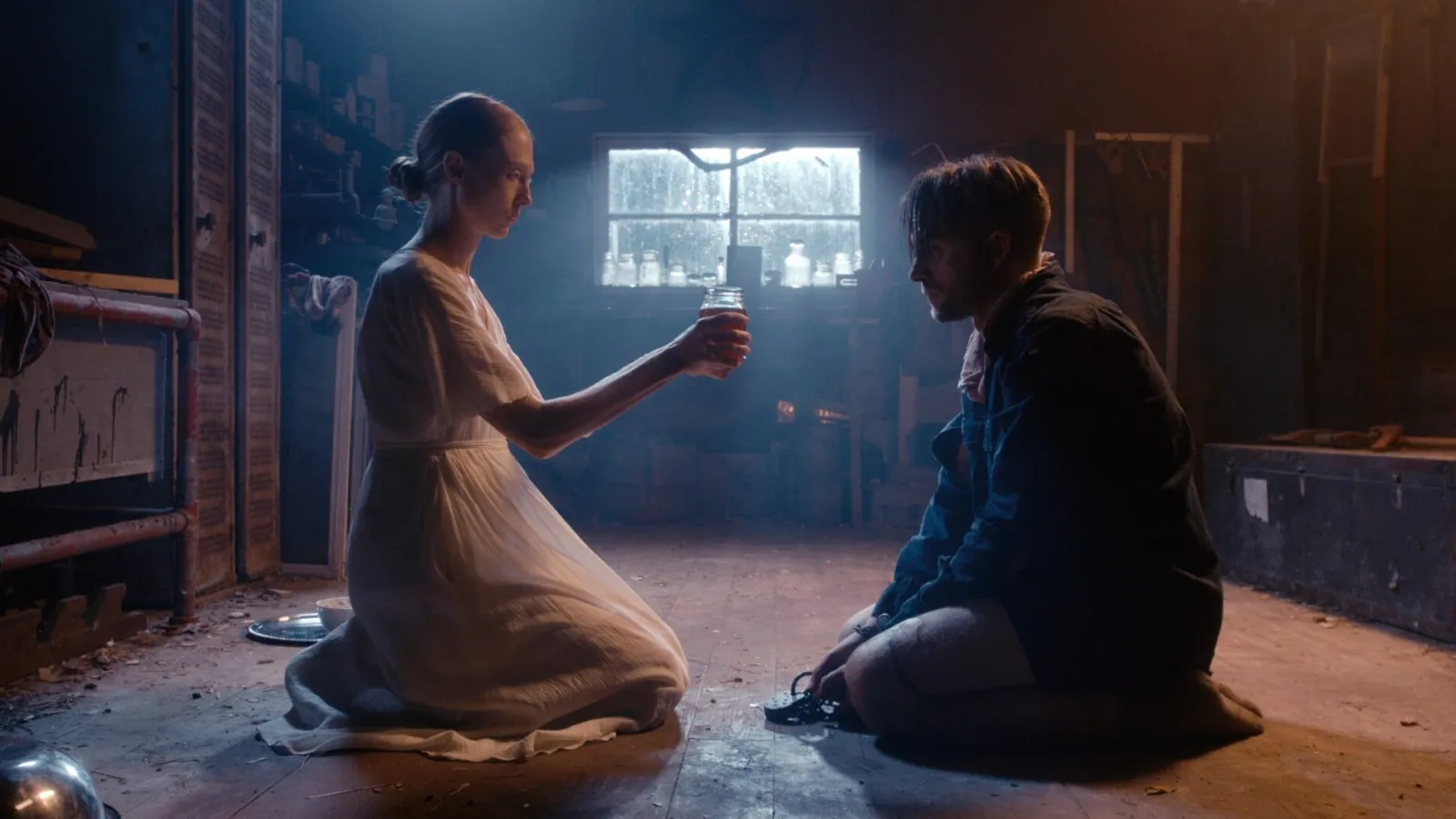
What she plays instead is undoubtedly conviction, which turns out to be much worse to experience. Clara does not practice her beliefs and does not put in the work. She succeeded completely and she is generous. There’s a tenderness to the performance that keeps colliding with what his hands are actually doing, and it’s from this collision that most of the film’s true horror comes.
It helps immensely that his worship is solitary. Cult horror generally relies on the crowd, the chants, the group as one. Larry Fessenden emerges as the leader whose teaching shaped her, and Brendan Sexton III and Toby Poser fill the world, but Clara practices mostly alone. A person, absolutely certain, with no one to answer to. That’s a scarier proposition than a room full of dresses.
Visual thinking supports it. The sunlight in this film is no comfort. He exposes, whitens, he finds you. The upstate landscape is truly stunning, and the film keeps putting blood, dirt, and bare skin right in the middle, so there’s never a pause in the beauty. Bennett and Brooks have real confidence in where to point a camera, and the flesh and punishment material lands hard because the frame refuses to look away or dim the lights for you.
Brighton, meanwhile, is not someone you’ll want to save. He’s arrogant, he treats women badly, he’s a mess with drugs, and he’s built his career on filming the suffering of others. Seeing a man like that get taken by someone whose cruelty operates on a completely different scale is a truly uncomfortable moral issue, and the film is smart enough to know that.
Where it loses the thread

The middle drags. There is no polite way around this.
Clara’s rituals begin to feel like variations rather than escalations, and the symbolism keeps repeating a point that the film made clear in its first act. Blood Shine has faith, control, misogyny, addiction, horror-cinema-embedded exploitation, bodily transformation, and the idea that pain can buy transcendence all sitting on the table at once. Having ideas and building an argument from them are separate tasks, and the latter is only accomplished in patches.
The Brighton-as-filmmaker angle is the most obvious casualty. Voyeurism, artistic ego, an industry that devours people, all of this is brought up and very little is pressured. It’s like we’re moving away from something.
The ending divided people and I understand both sides. There are strong images there and a real attempt at catharsis. At this point, there is also more on the table than any conclusion could have made clear.
Still, this is the kind of indie horror worth showing up for. Bennett gives a performance that will follow you out of the theater, and the film’s argument about light is executed with more nerve than many great films manage all year. Be patient for the intermediate section. What surrounds him gets him into trouble.
3.5 out of 5.
Blood Shine is in select theaters and available digitally from Dark Sky Films starting August 21, 2026.